Clinic Information, Appointment Fees & Availability - view here
Private health insurance accepted – view approved providers & booking information
Understanding Pelvic Health Series
Pelvic health is an area many women are never formally taught about, yet it plays an important role in bladder, bowel and pelvic wellbeing. This short video series explains the foundations of pelvic floor function and some of the common reasons symptoms may develop.
These videos provide general education and are not a replacement for personalised physiotherapy assessment.
Video 1: Understanding Pelvic Floor Dysfunction
Approx. 2.5 min watch
Many pelvic health symptoms such as bladder leakage, pelvic heaviness, pain with intimacy, or difficulty emptying the bladder or bowel are often linked to how the pelvic floor muscles are functioning.
In this video, I explain what the pelvic floor is, how it supports bladder, bowel and pelvic health, and how pelvic floor dysfunction can contribute to common symptoms.
Video 2: Pelvic Floor, Breathing & Core - Why It's More Than Kegels
Approx. 4.5 min watch
Pelvic health is often associated with pelvic floor exercises, sometimes called Kegels. However, the pelvic floor does not work in isolation.
In this video, I explain how the pelvic floor works together with the diaphragm, breathing and the deeper core muscles to support pressure management, movement and pelvic health.
Video 3: How Pelvic Health Physiotherapy can Help
Approx. 2 min watch
If you’re experiencing pelvic health symptoms, you may be wondering whether physiotherapy could help and what an assessment involves.
In this video, I explain what pelvic health physiotherapy looks at, what treatment may include, and the different ways you can access support depending on what feels most comfortable for you.
PELVIC HEALTH GUIDES
Each guide focuses on a specific pelvic health concern and provides clear education, reassurance, and guidance to help you better understand your symptoms and options for support.
They are designed to be worked through at your own pace and may help you feel more confident about what is normal, what may need further input, and when personalised physiotherapy support might be helpful.
These guides are not a replacement for individual physiotherapy assessment or treatment, but a supportive starting point alongside professional care where needed.
Bladder Health Guide
Understand bladder symptoms and take gentle first steps
Bowel Health Guide
Support bowel function with confidence and clarity
Pelvic Organ Prolapse (POP) Guide
Clear, reassuring information about prolapse
Pelvic Pain Guide
Gentle guidance for persistent or recurring pelvic pain
Pregnancy Pelvic Girdle Pain (PGP) Guide
Understanding and supporting pelvic girdle pain in pregnancy
Postpartum Recovery Guide
Support recovery after birth, at your own pace
Don't forget to save a copy of your guide!
If you have a google account, you can select to save a copy of this guide to your google drive.
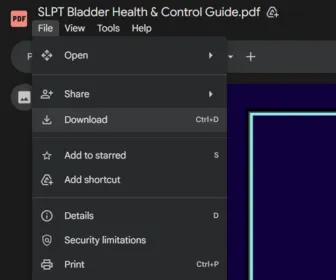
Alternatively, select the 'download' icon or go to 'File' and select 'Download' to save your copy.